

For Drivers
Drive with a network
behind every mile.
We connect CDL-A drivers with our own fleet and the partner carriers in our network — company drivers, owner-operators and teams. Apply once, talk to a real recruiter, and choose the job that fits your life.
Choose your path
Three ways
to drive with us.
Company driver
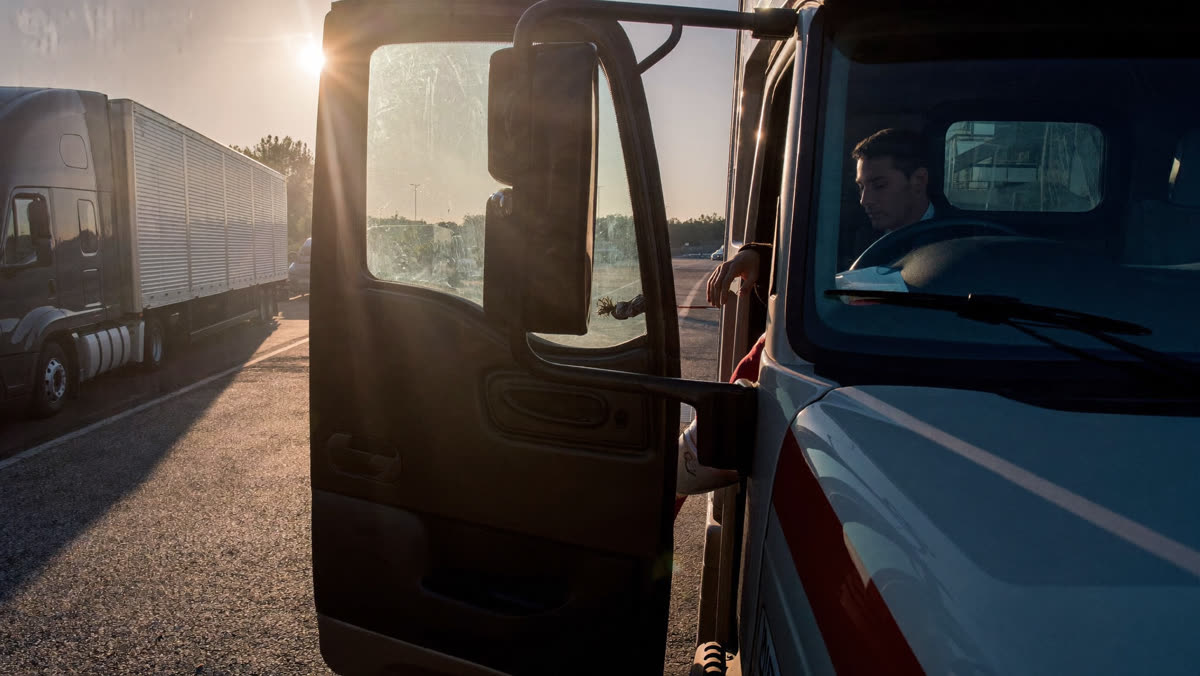
Drive a carrier’s truck. The carrier covers the equipment, fuel and maintenance — you focus on the miles. We help you find the carrier, lanes and home time that fit.
Apply as a company driver
Owner-operator
Your truck, your business. Lease on to a partner carrier — or run under your own authority with dispatch from our team and help finding the right factoring, fuel card, insurance and ELD providers.
Apply as an owner-operator
Team drivers
Two drivers, one truck, more miles. Apply together with your co-driver — or tell us you’re open to running as a team.
Apply as a team
How it works.
STEP 01
Apply in a few minutes
A short form: your CDL, experience, equipment and where you live. No SSN, no license number, no long work history — that comes later, with your consent, when your recruiter checks your record and you apply to the carrier you choose.
STEP 02
Talk to a recruiter
A real person calls you — or meets you on a video call — to hear what you want: pay type, home time, lanes and freight.
STEP 03
Choose your carrier
We walk you through your options in plain words. You pick the one that fits, then complete that carrier’s own DOT application.
STEP 04
Roll out
Orientation, your truck, your first load — and your recruiter stays in touch if anything comes up.
Details upfront
What you’ll know
before you say yes.
Before you commit, your recruiter goes through the details that matter — the questions drivers usually only get answered after orientation.
- How you’re paid — per mile, percentage, hourly or weekly
- Home time — how often, and how it’s scheduled
- The truck — make, transmission, APU or inverter
- The freight — drop-and-hook or live load, touch or no-touch
- The lanes and regions you’ll run
- Orientation — where, how long, and what’s covered
- How detention, layover and breakdowns are paid
- Owner-operators: fuel surcharge, chargebacks, escrow and settlement timing
- Which of our teams back that carrier — dispatch, breakdowns, settlements
The network behind your carrier
The teams behind
our partner carriers.
Partner carriers choose which of our teams they work with — dispatch, breakdowns, files, settlements and more. Ask your recruiter which ones back the carrier you’re considering.
Dispatch that plans ahead
Loads that set up the next one, and a dedicated dispatcher who handles brokers, times and changes.
DispatchBreakdown help
A good shop on your route, the price agreed before work starts, and towing arranged if it’s needed.
FleetFiles that stay clean
Licenses, medical cards, permits and inspections tracked before they expire — so a missing document doesn’t catch you at a scale or inspection.
SafetyELD help, any hour
Log questions, device malfunctions and roadside inspections — with live support around the clock.
ELDThe right fuel card
Owner-operators: compare fuel card programs — discounts, network and fees — for the routes you run.
Fuel CardCoverage for you
Health, life, disability, dental and vision — personal coverage options for drivers without company benefits.
InsurancePay calculated right
Loads, mileage, detention and deductions checked on every settlement.
AccountingParts, found fast
Truck and trailer parts found by our parts desk and sent to the shop or the roadside.
Parts
Equipment
The freight we recruit for.
Pick yours.
Dry Van
Enclosed general freight — the most common place to start. No tarps or chains; load bars or straps keep freight from shifting.
Reefer
Temperature-controlled freight — food, produce, medicine. You watch the unit and the temperature on every load.
Flatbed
Open-deck freight — lumber, steel, machinery — secured with straps and chains, often tarped.
Step Deck
A lower deck for taller loads like equipment and machinery: flatbed skills with more height to work with.
Power Only
Pull a shipper’s or broker’s trailer — often pre-loaded, drop-and-hook. Owner-operators bring their own tractor.
Owner-operators
Your truck.
Your business.
Our backup.
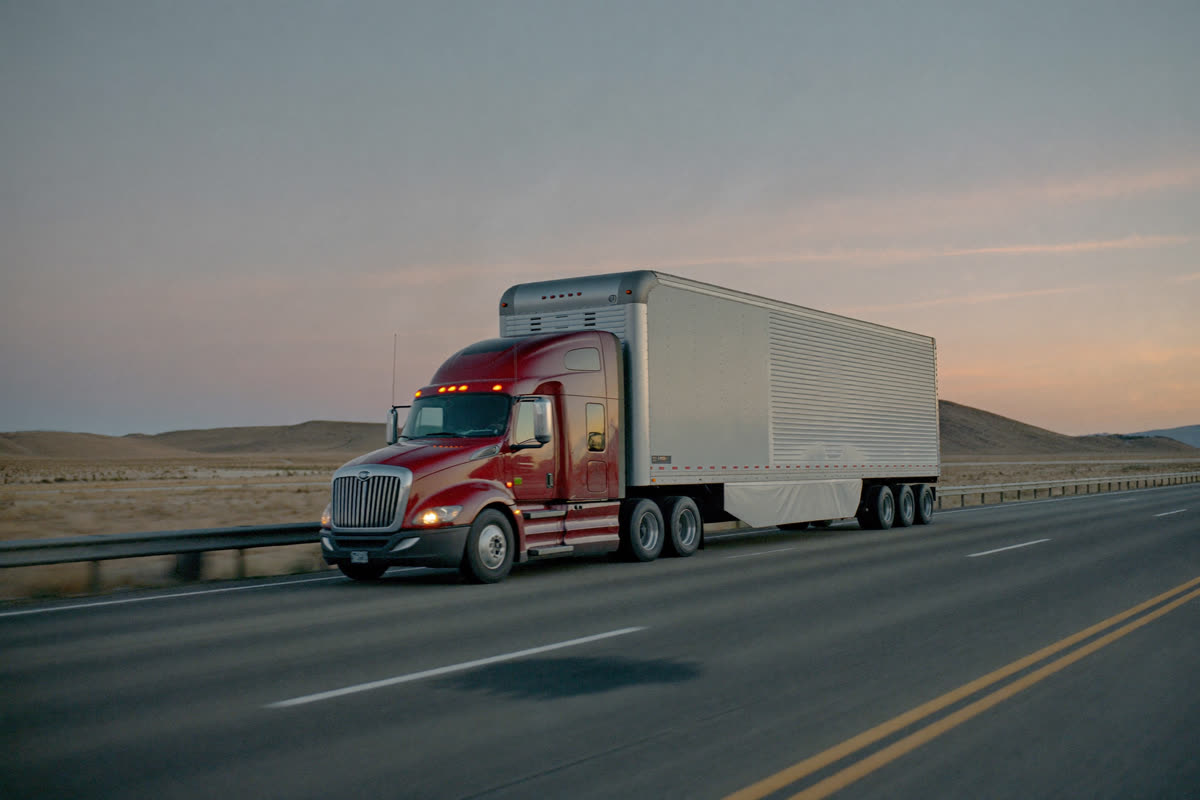
Run under your own authority with our teams behind you, or lease on to a partner carrier — and ask your recruiter which of our teams back that carrier.
Lease on to a carrier
Run under a partner carrier’s authority and insurance filings, with your own truck. Who pays for what, and how loads are assigned, are set in the lease — compare them below.
Your own authority
Keep your own MC — with dispatch from our team, and help finding the right factoring, fuel card, insurance and ELD providers.
Compare every offer on:
- Percentage of the load or a per-mile rate
- Fuel surcharge — is it passed through in full?
- Chargebacks — insurance, plates, trailer rental
- Escrow — how much, and when it comes back
- Settlement timing — how often you get paid
- Dispatch — forced, or you choose your loads
Team drivers
Two drivers.
One truck.
More miles.
Team runs keep the truck moving while one of you rests — freight built for speed. Apply with your co-driver, or tell us you’re open to running as a team.
Ask your recruiter about:
- How team pay is split
- Bringing your own co-driver
- The sleeper setup in the truck
Requirements
What you need
to get started.
CDL-A
A valid Class A commercial driver’s license from one state.
21 or older
The federal minimum age for interstate driving.
DOT medical certificate
A current medical certification from an examiner on FMCSA’s National Registry.
Drug & alcohol
A DOT drug test and a Clearinghouse query before your first load.
Driving record
Our recruiters review your record before we match you; the carrier you choose runs its own pre-employment checks (DOT application, drug test, Clearinghouse).
English proficiency
Interstate drivers must read and speak English well enough to talk with officers and read road signs.
Work history
Employers for the last 3 years, plus any commercial driving in the last 10 years — for the carrier’s application.
Exact requirements — experience, record and equipment — vary by carrier. Your recruiter tells you before you apply.
Apply
Apply in a few minutes.
Three short steps. No SSN, no license number, no long work history — just enough for a recruiter to call you with the right options.
Application received.
A recruiter will review it and contact you as soon as possible. Keep your phone close — the call may come from a number you don’t know.
Your reference:
Get these ready for the call:
- Your CDL
- Your DOT medical certificate
- Employers for the last 3 years
- Your Drug & Alcohol Clearinghouse login
Driver resources
Straight from the rules.
Plain-English summaries of the FMCSA rules drivers ask about most. Checked October 2026 — always confirm with the official source.
Hours of Service at a glance
Property-carrying drivers of interstate commercial vehicles (10,001 lbs and up):
- 11 hours of driving after 10 consecutive hours off duty.
- No driving after the 14th hour since you came on duty — breaks and lunch don’t stop that clock.
- A 30-minute break after 8 hours of driving. Off duty, sleeper berth or on duty not driving (fueling, waiting at a dock) all count.
- No driving after 60 hours on duty in 7 days, or 70 hours on duty in 8 days if your carrier runs every day — you can still do other work, just not drive. A 34-hour restart (34 hours in a row off duty) starts a new period.
- Sleeper-berth split: at least 7 hours in the berth plus at least 2 hours off duty or in the berth, adding up to 10 (8/2, 7/3). Paired correctly, neither period counts against your 14 hours.
- Bad weather or unusual road or traffic conditions you couldn’t have known about before you started: up to 2 more hours of driving to finish the run or reach a safe place, and the 14-hour window stretches to 16.
- Short-haul: stay within 150 air miles of your normal work reporting location, return there and be released within 14 hours — no ELD or log needed (your carrier keeps time records), and no 30-minute break.
Sources: eCFR 49 CFR 395.3 (opens in a new tab) eCFR 49 CFR 395.1 (opens in a new tab) FMCSA: Hours of Service (opens in a new tab)
Ready for a roadside inspection
What to have with you, or be able to show:
- Your CDL.
- Medical certification: since June 2025 your exam result is sent electronically to your state CDL record. From October 12, 2026 that record — not a paper card — is the proof for CDL holders (Alaska-licensed drivers: check FMCSA’s current exemption). Check your record after every exam to make sure it posted.
- The ELD packet: instructions for sending your logs to an officer, the ELD malfunction sheet, and blank paper logs for at least 8 days.
- Your logs for today and the previous 7 days.
- Proof of the annual inspection (the report or the decal on the vehicle).
- Registration cab card, IFTA license and decals, permits for the load and the states you run.
- Bills of lading and other trip papers you have with you.
- Leased to a carrier: a copy of the lease, or the carrier’s statement covering your truck.
- Emergency equipment: a charged, mounted fire extinguisher and three reflective triangles.
Sources: eCFR 49 CFR 395.22 (opens in a new tab) eCFR 49 CFR 395.8 (opens in a new tab) eCFR 49 CFR 393.95 (opens in a new tab) eCFR 49 CFR 391.41 (opens in a new tab) eCFR 49 CFR 376.11 (opens in a new tab)
Pre-trip checklist
Before you drive, make sure the truck is safe (49 CFR 392.7, 396.13). A practical walk-around:
- Under and around the truck: leaks (oil, coolant, fuel, air) and fresh damage.
- Engine bay: oil, coolant and power-steering levels, belts and hoses.
- Tires: pressure, cuts and bulges. Tread at least 4/32" on steer tires, 2/32" on all others.
- Wheels and rims: loose or rust-streaked lug nuts, cracks, hub seals.
- Brakes: air build-up, leak test, low-air warning, parking brake, slack adjusters, hoses and chambers.
- Steering: no excess play, linkage tight and undamaged.
- Lights and reflectors: headlights, turn signals, brake lights, markers, reflective tape.
- Coupling: fifth-wheel jaws locked on the kingpin, no gap, air and electrical lines connected, landing gear up.
- Mirrors, windshield, wipers and washer.
- Cargo secured, doors latched, seal number matches the paperwork.
- Horn, fire extinguisher and triangles.
- Cab: ELD logged in, the last inspection report reviewed, papers on board.
- End of the day: walk around again and write up any defect on the DVIR.
Sources: eCFR 49 CFR 392.7 (opens in a new tab) eCFR 49 CFR 396.13 (opens in a new tab) eCFR 49 CFR 396.11 (opens in a new tab) eCFR 49 CFR 393.75 (opens in a new tab)
Your records: PSP, MVR, Clearinghouse
Know what a carrier will see before they see it:
- PSP report: 5 years of crashes and 3 years of roadside inspections from FMCSA’s database. Order your own at psp.fmcsa.dot.gov for $10.
- MVR: your state driving record, ordered from your state DMV. Carriers check it when they hire you and every year after.
- Drug & Alcohol Clearinghouse: register with a Login.gov account to see your own record and to give the consent carriers need before they hire you.
- CSA: there is no public CSA score for drivers. Inspections and crashes count toward the carrier you drive for, and your own history follows you on PSP.
- Wrong data? Challenge inspection or crash records through DataQs, with documents that prove it.
Sources: PSP — psp.fmcsa.dot.gov (opens in a new tab) Clearinghouse (opens in a new tab) DataQs (opens in a new tab)
Medical card & CDL basics
The rules behind your license:
- A DOT medical certificate lasts up to 24 months — less if the examiner needs to monitor a condition.
- The exam must be done by an examiner listed on FMCSA’s National Registry.
- If your medical certification lapses, your state downgrades your CDL unless you recertify — book the next exam early.
- Class A covers combinations of 26,001 lbs or more where the towed unit is over 10,000 lbs.
- A first Class A CDL requires Entry-Level Driver Training from a provider on FMCSA’s Training Provider Registry.
- Since June 2025, failing the roadside English proficiency check puts a driver out of service.
Sources: National Registry (opens in a new tab) eCFR 49 CFR 383.91 (opens in a new tab) Training Provider Registry (opens in a new tab)
Official links
- FMCSA Hours of Service (opens in a new tab)
- ELD information (opens in a new tab)
- Drug & Alcohol Clearinghouse (opens in a new tab)
- PSP — your safety record (opens in a new tab)
- DataQs (opens in a new tab)
- SAFER company snapshot (opens in a new tab)
- National Registry of Medical Examiners (opens in a new tab)
- CDL information (opens in a new tab)
General information, not legal advice. Rules for passenger carriers, hazmat and intrastate operations differ.
For Drivers
Questions drivers
ask us.
Who will I drive for?
The carrier you choose from our network — including Fleet Rise’s own fleet. You are hired by, and drive for, that carrier, and you complete its own DOT application. We connect you, explain your options and stay in touch.
How is pay calculated?
It depends on the carrier and the job: per mile, a percentage of the load, hourly or a weekly amount. Your recruiter tells you exactly how pay works — and how detention, layover and breakdowns are paid — before you commit.
How often will I be home?
That depends on the lanes: local, regional and over-the-road jobs run very differently. Tell us the home time you want in the application, and your recruiter matches your options to it.
Can I apply without CDL-A experience?
Yes — choose “None yet” in the application. Requirements vary by carrier, so your recruiter will tell you straight which options fit.
I’m still in CDL school, or don’t have a CDL yet. Can I apply?
Yes — tell us where you are in the application. A carrier needs a valid CDL-A before you drive, so your recruiter will tell you honestly whether there’s an option for you now or when you have your license.
What can disqualify me?
Federal rules keep you off the road without a valid DOT medical certificate or with a “prohibited” status in the Drug & Alcohol Clearinghouse. Beyond that, each carrier sets its own standards — common reasons are recent serious violations or preventable crashes, and gaps in work history that can’t be explained. If something is on your record, say so early.
Who sees my application?
Our recruiting team reviews it first. To match you with a job, we share your details with partner carriers that fit what you’re looking for — your recruiter tells you which ones.
What documents should I have ready?
Your CDL, your DOT medical certificate, a list of employers for the last 3 years (and any commercial driving in the last 10), and your Drug & Alcohol Clearinghouse login.
I’m an owner-operator. Can you help with my own authority?
Yes. Our Company Sale team can set up a new company with its own authority — LLC, EIN, MC & USDOT numbers, BOC-3 and UCR — and our Safety team can keep those filings current if you add it. Dispatch comes from our team, and we help you find the right factoring, fuel card, insurance and ELD providers.
Can I apply with my co-driver?
Yes. Choose “Team driver” in the application and add your co-driver’s name in the last step.
Do I need a Clearinghouse account?
To see your own record and to give the consent a carrier needs before hiring you, yes. Registration is online through Login.gov at clearinghouse.fmcsa.dot.gov.
What is a PSP report?
Your Pre-Employment Screening Program report: 5 years of crashes and 3 years of roadside inspections from FMCSA’s database. Carriers can see it with your consent; you can order your own at psp.fmcsa.dot.gov for $10.

Meet the recruiting team
Andrew W.
Driver Recruiter
recruiting@fleetrisepartners.com
- What do you ask a driver first?
- What they want: pay type, home time, the freight and the lanes. Then we look at the experience and the record together.
- What should a driver ask you?
- Everything — how pay is calculated, how often you’re home, what truck you’ll drive, how detention is paid. A good job holds up to every question.
- What makes a placement work?
- Honesty on both sides. When the job matches what the driver was told, the driver stays.
Ready when you are.
Apply in a few minutes — a recruiter will contact you as soon as possible.